Nearly 8 in 10 Zero Proof Consumers Also Buy Liquor, Wine and Beer

Do you like zero proof drinks but also still haven't given up the occasional gin-and-tonic or a glass of Champagne? You're not alone. (Also: Same.)
I've written about this before but the vast majority of the momentum behind the zero proof movement is led by consumers who still drink.
Last fall, NielsenIQ reported that in 2021, nearly 8 in 10 zero proof consumers still also drink alcohol.
Strong sales for non-alcoholic products are driven by health and wellness trends but also innovation. While non-alcoholic beer has existed for some time, the expansion of the category into premium spirits, aperitifs and ready-to-drink cans has pulled in consumer interest.
Consumer demand for zero proof suggests that people are motivated to limit the impacts of drinking, and they are making decisions that favor taste over buzz.
In 2021, non-alcoholic sales notched $331 million, up 33.2% from the year prior, according to NielsenIQ.
No Amount of Alcohol Safe for Heart, Study Finds
There's no such thing as a healthy amount of alcohol when it comes to heart health, according to the World Heart Federation.
In a report published on Jan. 20, the WHF “is challenging the widespread notion that drinking moderate amounts of alcohol can decrease the risk of heart disease, and calling for urgent and decisive action to tackle the unprecedented rise in alcohol-related death and disability worldwide.”
“Contrary to popular opinion, alcohol is not good for the heart,” the WHF states. Despite (or perhaps, because of) media messaging about “healthy amounts” of drinking, the rates of cardiovascular disease have nearly doubled in the 2000’s, claiming over 18.5 million lives. In 2019, over 500 millions of cardiovascular disease were reported, while 2.4 million deaths were linked to alcohol use.
The report, which cites over forty studies and global research by the World Health Organization and others, argues that alcohol abuse cuts across country and demographic lines. In particular, pervasive messaging about “healthy amounts of drinking” targets young drinkers. Among the WHF’s recommendations: Treat alcohol like previous generations treated Big Tobacco. The WHF recommends public health campaigns, raising prices and taxes, printing health warning on products and restricting alcohol marketing, especially when targeting younger adults. Finland, for example, banned alcohol advertisements on social media.
That said, the WHF report has some critics, who point out that the organization cherry-picked its findings. The American Heart Association tells CNN that they promote “moderation.” “We concluded that if one doesn't drink alcohol, do not start; and if one does drink alcohol, limit intake,” Dr. Mariell Jessup, the chief science and medical officer for the AHA, said.
While the merits of the study may yet still be debated, one quote in the WHF report resonates: “The portrayal of alcohol as necessary for a vibrant social life has diverted attention from the harms of alcohol use.”
Global No- and Low-Alcohol Market Nears $10 Billion in 2022

More than just a passing trend, the no- and low-alcohol market is now valued at just under $10 billion, according to new research by IWSR Drinks Market Analysis.

Key findings from the newly released report show that the no- and low-alcohol sector sustained momentum in 2021, even as bars across the country re-opened.
The no- and low-alcohol sector continues to outperform full-alcohol across ten key global markets. Sales grew by 6% in volume over the last year, and now represent 3.5% of the total alcohol market. (An earlier IWSR report predicts that the category will grow to 30% within the next few years.)
What's behind the strong sales? Moderation.
Nearly half (43%) of consumers in these markets said they switched between no- and low-alcohol options and full-alcohol drinks. Many said they chose a no- or low-alcoholic drink because they were trying to avoid the effects of liquor.

Only 17% of consumers surveyed avoid alcohol completely. In the U.S., an estimated 23% of no/low drinks abstain from alcohol.
The most surprising finding: Most consumers prefer no/low drinks in the day or during the early evening but not late at night. "Only 5-6% of no/low consumers drink it after 11 p.m.," IWSR's press release says. "Many no/low brands targeting late night partying and dark spirits occasions have found it tougher to gain consumer acceptance."
That said, the strength of the no/low sales point to quickly-evolving social mores.
Once dismissed as a fad or something to be embarrassed about, the no/low category is finally gaining what it has sought all along: Respect in the marketplace.
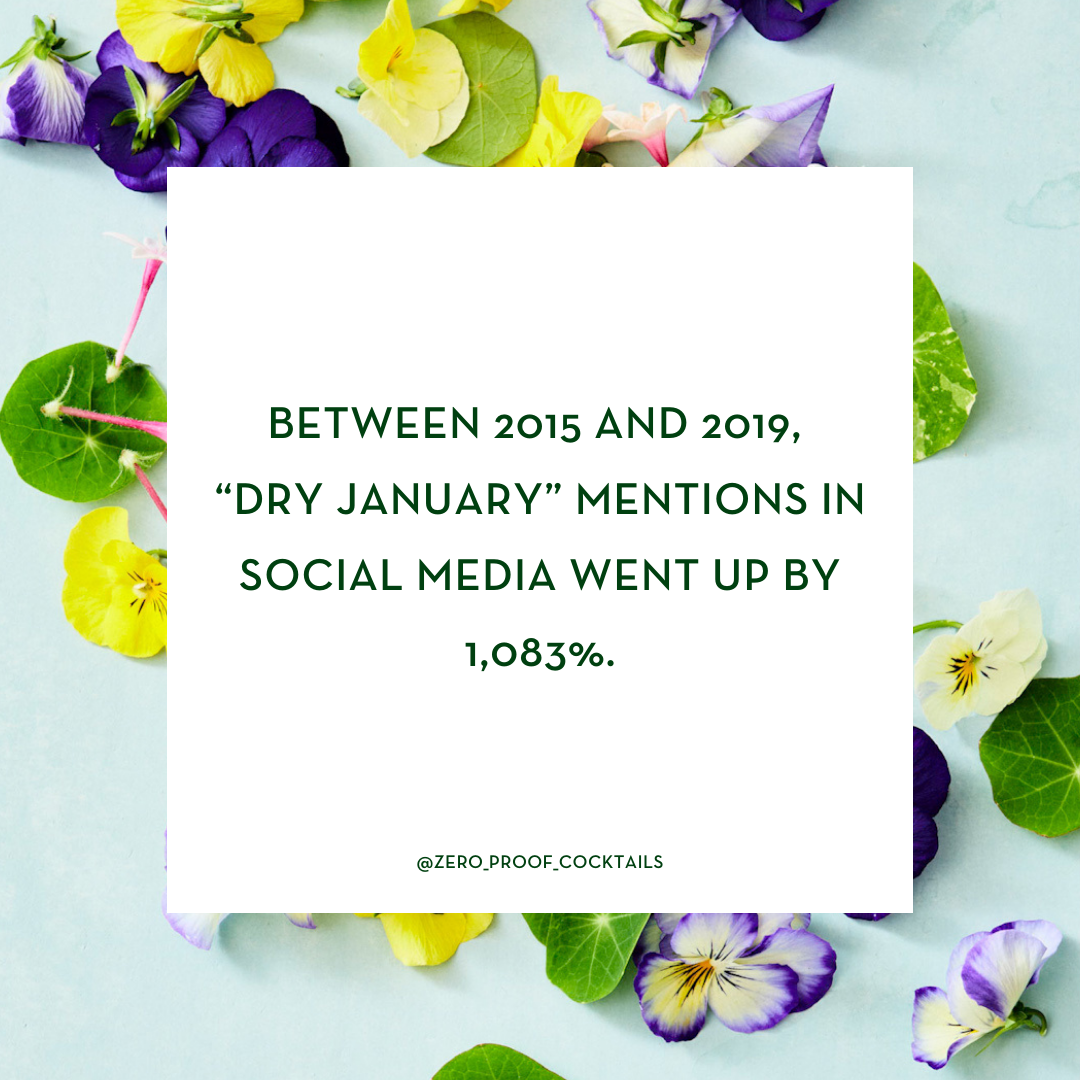
Dry January Mentions Soared By 1000% in Four Years
When did you first hear about Dry January?
If taking a month off of drinking feels like it's become a regular part of each new year, that's because the conversation has increasingly grown over time, especially on social media.
Is there a point where Dry January will be over-saturated? Or has it woven itself inextricably into the contemporary wellness culture?
The sharp rise in interest in all things Dry January suggests it's not just a fad but a long-term trend. That said, at some point, even the strongest trends fade.
My version of a prediction: People will continue to do Dry January, but will evolve it to take time off drinking on their own terms, like "every three weeks of each month" or "every other two months."
However, you do it, do it on your own terms and find what works for you.
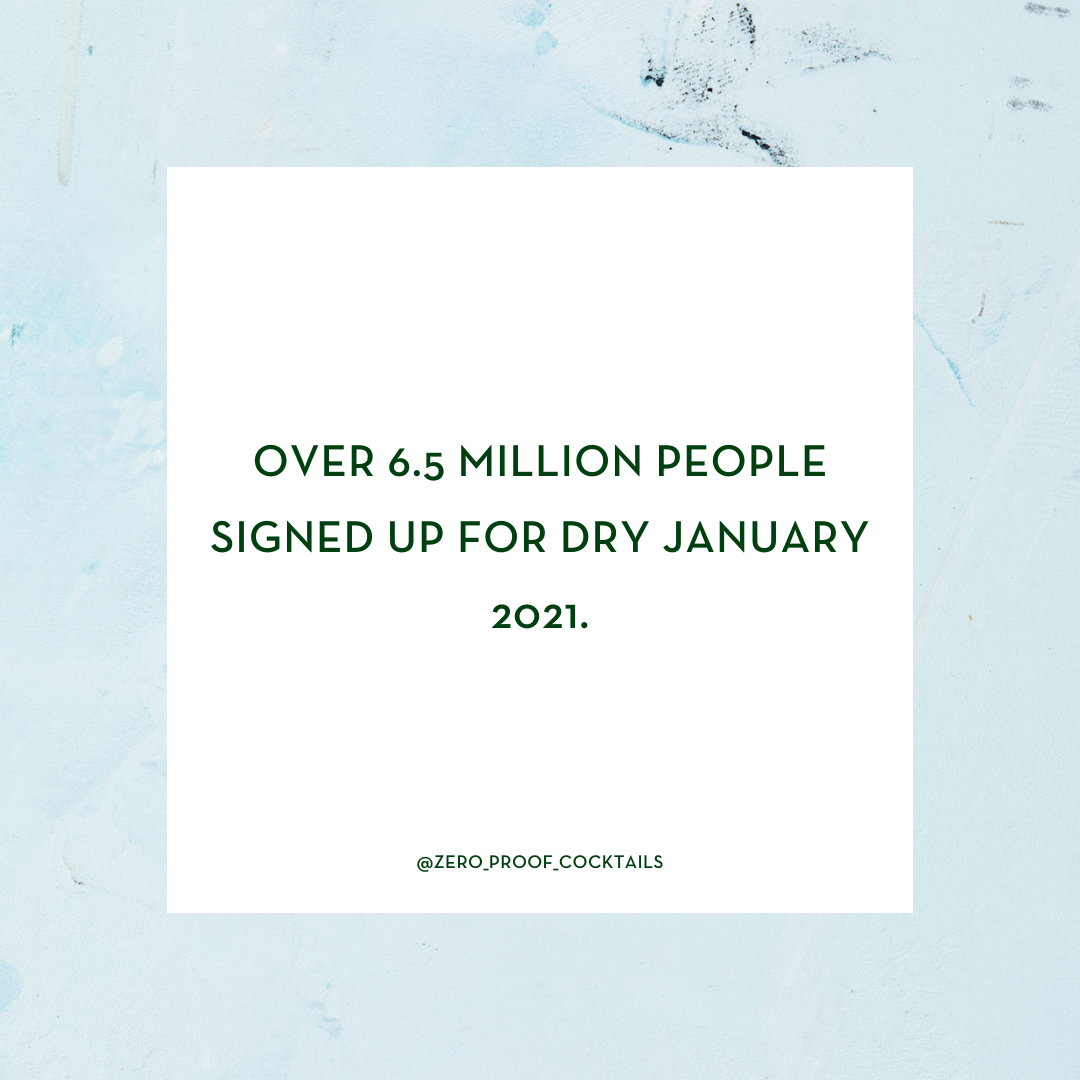
2021: Over Six Million Tried Dry January

Over six million people reported they tried Dry January last year.
Despite (or perhaps because of) news stories about people drinking a lot during the pandemic, a record amount signed up for a month of alcohol abstinence in 2021.
Will the trend continue upward this year? I'd bet a solid yes. Mostly because many people do Dry January on their own terms and don't sign up officially to be counted. (This number comes via the official Dry January app.)
If Google search trends are any indication, interest in the topic in the US spikes up every first of the year.

Zero Proof Is One of Publishers Weekly 'Best Books of 2021'

"What's your favorite season?" "Awards."
So! In a bit of *major* news, the kind people at Publishers Weekly have named Zero Proof as one of Best Books of 2021 (!!!). Zero Proof is just one of five books in the lifestyle section, sitting alongside Sam Sifton's New York Times No-Recipe Cooking book (*casual flex*). Zero Proof is also the only cocktail- and drinks-focused book on this list of 150 titles.
The editors write: "Ramirez, a former producer and reporter for the Wall Street Journal, offers a (non)spirited case for imbibing without alcohol, with help from some of the world’s best bartenders, in her fantastic debut.
Prefaced with a condensed history of how 'colonial Americans wove drinking into the fabric of socializing,' the recipes presented are part of the recent movement to normalize sobriety by applying the same care and craft to nonalcoholic beverages that’s given to boozy cocktails (to start: 86 the term mocktail)."
Thank you so very much to Publishers Weekly. And again, warmest thanks to the team (Justin, Leigh, Susan, Robert, Mallory, Maeve among others) who brought this vision to life, as well as all my bartender friends who contributed recipes and thoughtful interviews.

Five Reasons Why Mindful Drinking Helps With Better Health
We’ve all done it. We wake up after a night of boozy shenanigans with a growing sense of dread. Was there an ill-conceived text sent out? Was there a rambling nonsense fight that would never have happened if everyone wasn’t drunk? Are you nursing a crushing migraine and painful nausea that might last an entire day?
If you’ve ever had more than a handful of drinks in one night, then the answer to at least one of the questions above is “Oh, god, yes.” What’s also common is a sense of dread and guilt as you come to terms with the consequences of bad choices.
Thinking about cutting back on liquor or cutting it out altogether? Here are some benefits to drinking less.

Better Sleep, Better Health
Alcohol intake impacts sleeping patterns. It’s true that alcohol might make people sleepy in the short term, but health experts warn that those effects are short-term. Erratic sleeping patterns, including insomnia, are more likely to occur as a result of regular drinking. Drinking less alcohol will lead to better, deeper sleep, which in turn leads to overall health and mental clarity.
No Day-After Guilt
As mentioned at the start, there’s nothing quite like the dread of dealing with the consequences of choices you’d never make while sober. Skipping the drinking means staying in control, and waking up refreshed, not guilty.
Two Words: No Hangover
Going fully zero-proof or even switching between zero proof drinks and traditional drinks means that you can still go out and socialize. You can still have pretty drinks in great glassware. The main thing you’re likely to leave behind? Crushing hangovers. Everyone experiences hangovers differently but they are no fun for anyone. The thing about hangovers: They only get worse as you get older.
Glowing Skin
Alcohol use is linked to a range of health impacts. One of the most well-known (and visible) impacts: lackluster complexions. Alcohol dehydrates skin while also causing inflammation. Over time, that adds up to aging skin and discoloration that’s hard to remedy, a nutritionist told Vogue. Experts call alcohol one of the worst offenders when it comes to damaging skin.
Real Moments That You Remember
For many people, drinking too much means hazy or dropped memories the next morning. Going light on the alcohol, or skipping it altogether, means you’ll remember everything that happened while socializing, which is arguably the entire reason we go out in the first place.
After the year we’ve all had, we can’t take anything for granted, especially genuine moments with friends.
What Pandemic? Ritual Zero Proof Rides Sales Wave, Launches New Rum Alternative
One of the biggest headlines of the pandemic was: Everyone drank a lot of home, and ordered in massive amounts of alcohol. That’s true but it’s also true that despite (or because of?) that drinking trend, zero-proof spirits also experienced sales bumps.

Originally published in Forbes.
One of the biggest headlines of the pandemic was: Everyone drank a lot of home, and ordered in massive amounts of alcohol. That’s true but it’s also true that despite (or because of?) that drinking trend, zero-proof spirits also experienced sales bumps.

Ritual Zero Proof, one of the first American non-alcoholic spirit alternatives, launched in the fall of 2019. The following year could have been dismal for the new brand, given that the usual ways for consumers to discover new drinks products (bars, tasting events) were stifled during national lockdowns. And well, people were drinking cocktails at home, boosting Drizly sales to frothy heights.
And yet.
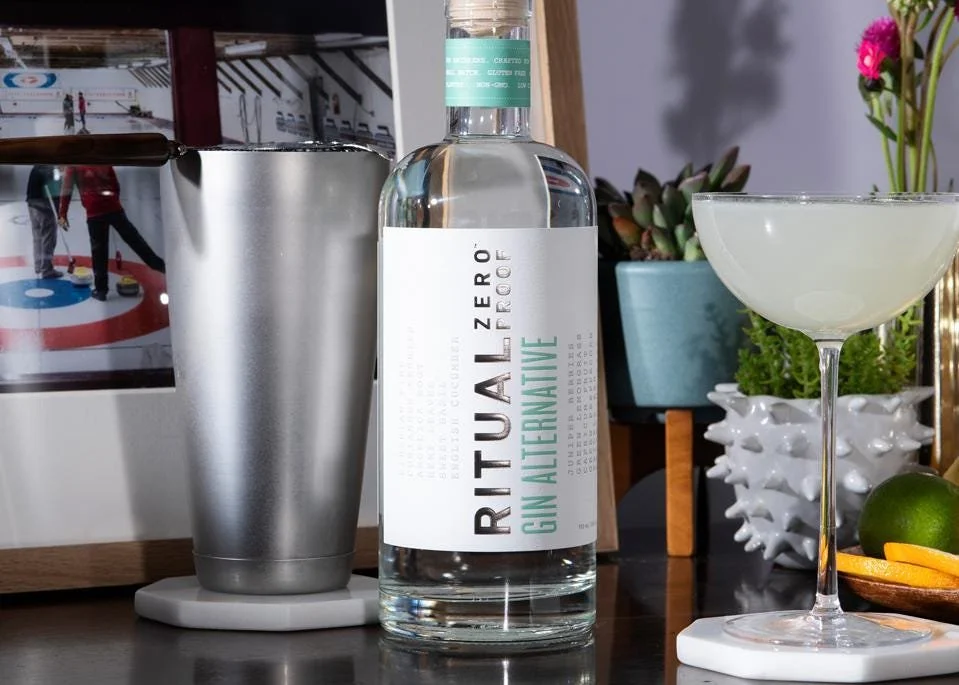
Ritual Zero Proof, which launched with zero proof all-natural botanical alternatives to gin, whiskey and later, tequila, also tracked strong consumer interest. The company recorded a 241% growth in revenue in 2020 and is already on track to beat those sales, according to company executives.
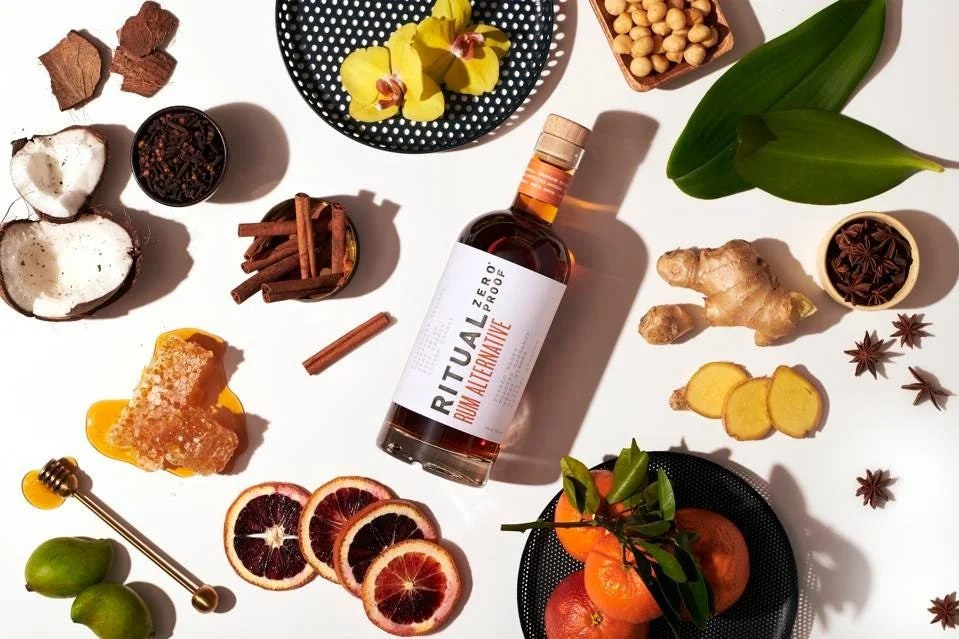
Early this month, the Chicago-based company launched its newest expression, a dark rum alternative, flavored with Tupelo honey, clove, and cinnamon. An online pre-sale of the rum set a company high for best single sales to date, notching a 38% increase from the previous record.
The pandemic boost sales of zero proof offerings from Ritual Zero Proof.

“There’s this perception that because of lockdowns, everyone got interested in health, and the same time, alcohol sales boomed,” Ritual Zero Proof co-founder Marcus Sakey says. “I think the pandemic had very little impact on our sales one way or the other.”
The surge in sales for Ritual wasn’t surprising to Sakey, given what he’s learned about his consumers. The typical zero proof consumer, Sakey says, is the same person who might buy beef as well as plant-based meals, and will drink dairy as well as oat milk. In short, this is someone who just wants more balance, not necessarily exclusion.
“[Our customers] are aware of their habits, and at the same time, very protective of them,” Sakey says. “They want to make a cocktail and not feel bad about it. What they love in Ritual is the ability to mix a cocktail however they like.”
“Our approach is: We’re not anti-alcohol, we are pro- having it your way,” Sakey says. He adds that up to half of Americans are actively trying to drink less, while at least of third of Americans don’t drink at all.
Given the mass closings of venues last year, Ritual (and other zero proof options) may not yet be in your local bar or store just yet. But with the reopening of the economy and the growing demand by consumers, expect more zero proof options to show up on bar menus and grocery store shelves.
Whereas when Ritual first launched, the company faced resistance from bars who were skeptical about buying non-alcoholic bottles that were priced similar to lower end liquors, that perception is changing, in part because of economics. “Beverage directors are seeing that this is a new revenue stream,” Sakey says. “The person who wants a non-alcoholic drink isn’t going to order a high proof cocktail. That’s money they are losing.”
Study: No Amount Of Drinking Alcohol Is Safe For Brain Health
Originally published in Forbes.
An Oxford University study is causing a stir in the drinks community for its findings about the impact of drinking on brain health. In short: No amount of drinking alcohol is safe for brain function, according to brain imaging data.
The observational study, published May 12, is not yet peer-reviewed; it is based on a cohort of over 25,000 British participants with an average age of 54. Brain scans were performed to measure the relationship between moderate alcohol consumption and brain health. The study was conducted by researchers with expertise in population health, psychiatry, and clinical neuroscience.
The researchers began with the premise that “moderate alcohol consumption is common and often viewed as harmless to brain health.” Researchers performed brain imaging using identical scanners on subjects. They found that alcohol consumption tracked with decreases in brain grey matter as well as white matter. Binge drinking alcohol posed additional negative effects on brain structure, in addition to the impact of the volume of alcohol consumed.
Respondents were separated in groups of “never drinkers,” “former drinkers” and “current drinkers.” Brain scans on identical machines tracked changes in brain volume and matter.
Researchers did not find any difference on the impact of drinking between types of liquor, such as wine versus beer or spirits. Researchers addressed the popular notion that wine is considered healthier than liquor. “We found no evidence to suggest alcoholic beverage type confers differences in risks to the brain,” researchers write. “This supports the hypothesis that it is ethanol itself, rather than other compounds in the beverage, that is on the biological pathway to damage. The associations of wine-drinking with higher educational level and socioeconomic status may explain the apparent health benefits.”
The impact of alcohol on overall health and the immune system has been top of mind for many recently, as more people wonder whether they can drink safely after getting a COVID vaccine. The short answer is yes, the FDA and the CDC don’t carry warnings about mixing liquor with vaccines. That said, the question gained currency after health officials noted that some studies show that heavy amounts of alcohol can suppress the immune system.
According the Oxford University researchers, several questions remain. They did not establish the threshold of when alcohol intake causes harm, or the impact of moderate drinking on brain connectivity. They speculate that drinking patterns, such as binge drinking, may worsen the impact of drinking on the brain but they do not have the data to support it.
Their conclusions, however, were quite clear.
“No safe dose of alcohol for the brain was found,” researchers write. “Moderate consumption is associated with more widespread adverse effects on the brain than previously recognized.” Researchers advise that existing “low risk” drinking guidelines should be revised to warn the public about the impact of brain effects.
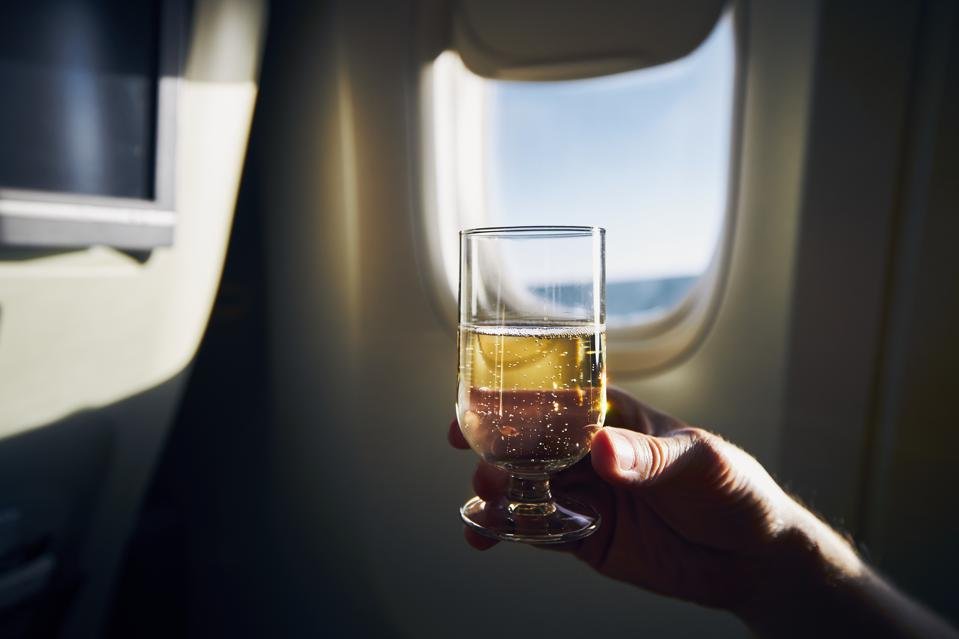
Airlines Ban Alcohol During Flights Following A Spike In Unruly Passengers

Originally published in Forbes.
Air travel is back, but in-flight drinks are being curtailed. Blame unruly passengers.
The loosening of travel restrictions and the availability of vaccines means that travel, especially air travel, is surging towards pre-pandemic highs. Along with those crowds, however, come reports of drunk and unruly passengers, which has prompted some airlines to ban alcohol during flights.

Last week, a high profile incident on a Southwest Airlines flight from Sacramento to San Diego caught the national attention when video surfaced of a fight between a passenger and a flight attendant.
The passenger, identified by Port of San Diego Harbor Police as Vyvianna Quinonez, is seen throwing several punches at a female flight attendant before a second passenger steps between them to break it up. According to the flight attendant’s union, the attendant lost two teeth in the incident, USA Today reports. Quinonez, the unruly passenger, was charged with battery causing serious bodily injury, a felony.
Airlines cut back on in-flight drink and meal service during the pandemic as a way to minimize the times people uncovered their faces; recently, some airlines, such as Delta, have returned to serving full hot meals and drinks.
Southwest was taking a more conservative route and had planned on re-introducing alcohol in late June. Following last week’s incident, as well as reports of general passenger unruliness, Southwest is suspending alcohol sales through June and July, travel site The Points Guy reports.
This weekend, American Airlines joined Southwest in declining to service alcohol in flight in some of its cabins. Like other airlines, American had suspended alcohol service last March to minimize customer interactions. American had reinstated alcohol service on May 1 to the premium cabins, with liquor sales set to resume in the economy section on June 1. However, following the Southwest incident, American will extend its alcohol ban in the economy section through Sept. 13, CNN reports.
Bans on in-flight alcohol service may not stem altercations with belligerent passengers, however.
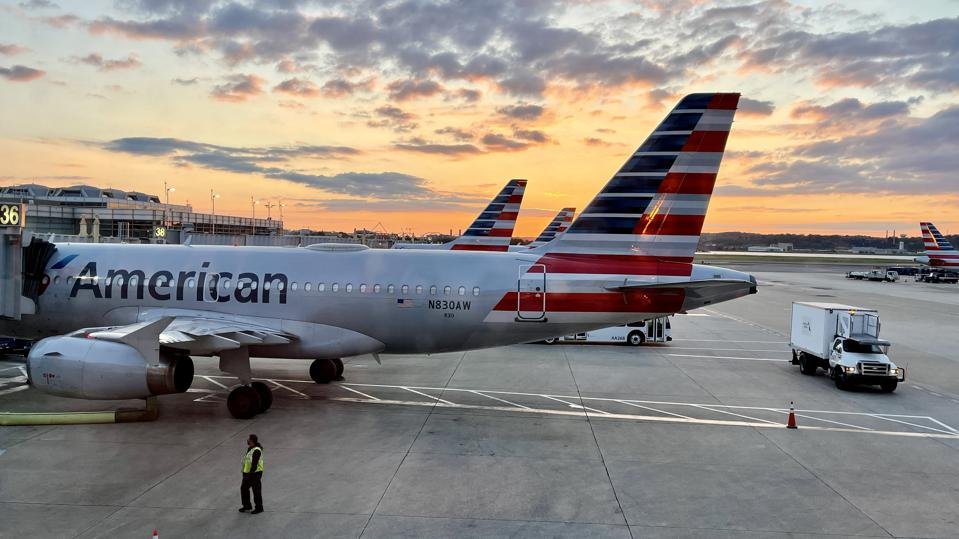
The FAA has published details of multiple altercations involving passengers who bring their own stash of alcohol on-board, and proceed to drink despite requests not to.
Two passengers on a Jan. 4 JetBlue flight were disruptive and allegedly drank from their own personal alcohol, leading into altercations with attendants. They were escorted off the plane by police and fined $31,750 and $16,750. A passenger on a Jan. 14 SkyWest flight from Arizona to Texas also reportedly drank “multiple 50 ml bottles of his own alcohol”, and became so belligerent that two off-duty law enforcement officers had to wrestle him into his seat; this passenger was later fined $14,500. In Feb., another JetBlue flight was disrupted when a flight attendant told a passenger they could not drink from their own mini bottles of alcohol. The disturbance escalated, and the passenger was fined $18,500.
Since the start of 2021, the FAA has received approximately 2,500 reports of unruly behavior by passengers, many of which are linked to refusing to comply with drinking and federal mask-wearing rules.

No/Low Alcohol Products Gain Market Share, Even In Pandemic
Originally published in Forbes.
Even within a pandemic, with its constant chatter about the popularity of drinking at home, zero-proof and low-proof alcoholic products continue to rise, according to a newly released market study from IWSR Drinks Market Analysis.
The Feb. report looks at alcohol consumption in the 10 key countries, including Australia, Canada, France, the U.K. and the U.S. , that represent over 75% of the global zero-proof and low-proof alcoholic beverage market. Globally, the no/low category ticked up to 3% of the total alcoholic market; total volume is forecast to grow by +31% by 2024.
The strength is the category is fueled by what IWSR describes as “a moderation trend that’s sweeping across key global markets.” Consumers are seeking out reduced alcohol and alcohol-free drinks; brands are rushing to fill what was, until a few years ago, a nearly non-existent category. New zero-proof products seemingly debut every month. What was once a sleepy category now includes everything from ready-to-drink canned drinks to gin alternatives such as Ritual Zero Proof, which announced last year it had taken a minority investment from drinks behemoth Diageo (who also invested in Seedlip, the zero proof distillate that arguably kicked off the no-proof craze.)
Even as bars, hotels and restaurants mostly shuttered around the world in 2020, no/low categories still saw gains across the 10 markets, marking a “positive, albeit muted growth,” of 1% in 2020.
While Germany, the largest no/low market, saw drops in the category, the United States, the category’s second largest market, recorded an increase of 30%, despite the mass closings of restaurants and bars, which is where most consumers discover new products. Even the traditional liquor state tasting was put on hold across multiple states in 2020. While challenges remain, IWSR predicts that interest in the no/low category will continue to make gains through to 2024 when it is expected to represent a full third of the total market.
Of particular interest is the zero-proof space. While no- and low-alcoholic products are currently measured together, the two product styles are growing at different speeds. IWSR found that no-alcohol sales volume grew by 4.5%, while low-alcohol decreased by 5.5%.
The growth of no-alcohol is fueled by drinkers as much as non-drinkers. Moderation, not full abstinence, is regarded as the trend behind the growth of the category. “More than half (58%) of no/low consumers report that they choose to switch between no/low and full-strength alcohol products on the same occasion, while only 14% state they do not drink alcohol at all,” IWSR reports. “The most popular occasion to consume no/low products is when relaxing at home (64%), and the category’s suitability to low-tempo occasions is a key reason why it has been so resilient during the pandemic.”
Tellingly, and in a note that could point to where this space is headed in post-pandemic times should we ever get there, IWSR’s research suggests that consumers are making decisions based on taste, “which underscores a finding that consumers are generally willing to pay a similar price for a no/low beverage as a full-strength one.”

No-Proof Venue Listen Bar Announces World Tour
Originally published in Forbes.
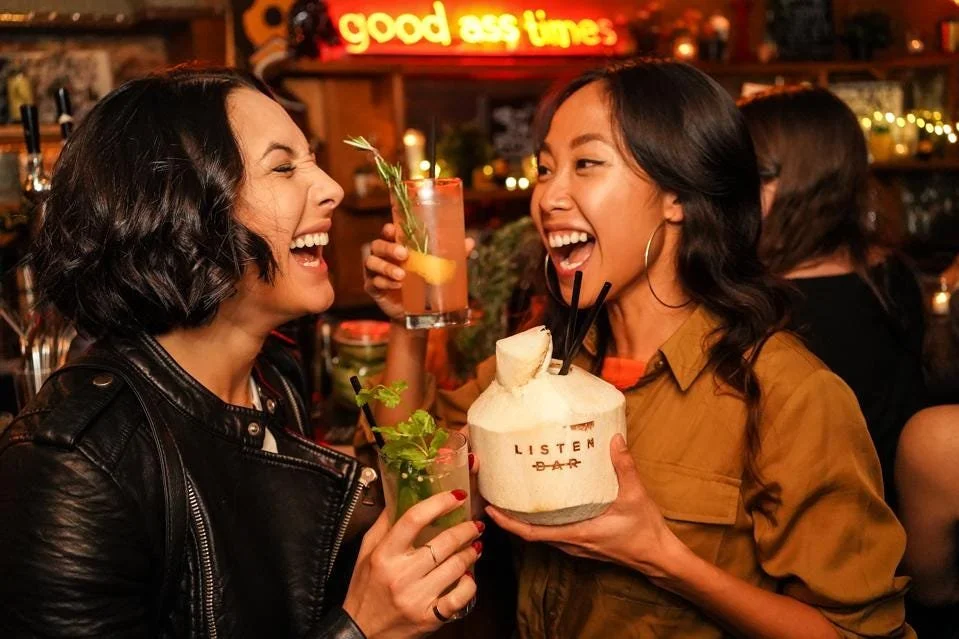
Listen Bar, New York’s popular non-alcoholic bar concept, is going global.
The New York-based no-proof bar, which just finished a month-long residency at the Williamsburg Hotel, has just announced that it’s taking its n/a cocktails and booze-free vibes on the road. Dates and locations are still being finalized, but over the next few months, look for Listen Bar at pop-ups in Los Angeles, Las Vegas, San Francisco, Seattle and Chicago. Over the summer, Listen Bar will jump to international waters, making stops in London, Berlin, Paris, Stockholm and Bucharest. (More stops and cities may be added, based on customer demand.)
Listen Bar founder Lorelei Bandrovschi and her team will be at all the stops along the tour. “The focus is going to be our greatest hits from our menu,” she says. “It’s going to be a combination of our bartending team and bringing in local musicians to bar tend with us.”
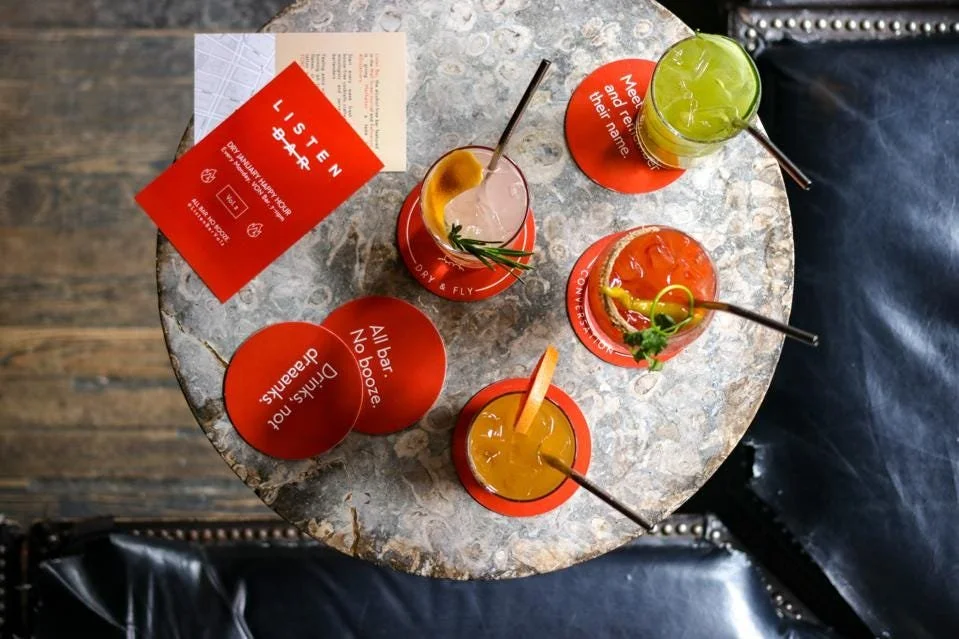
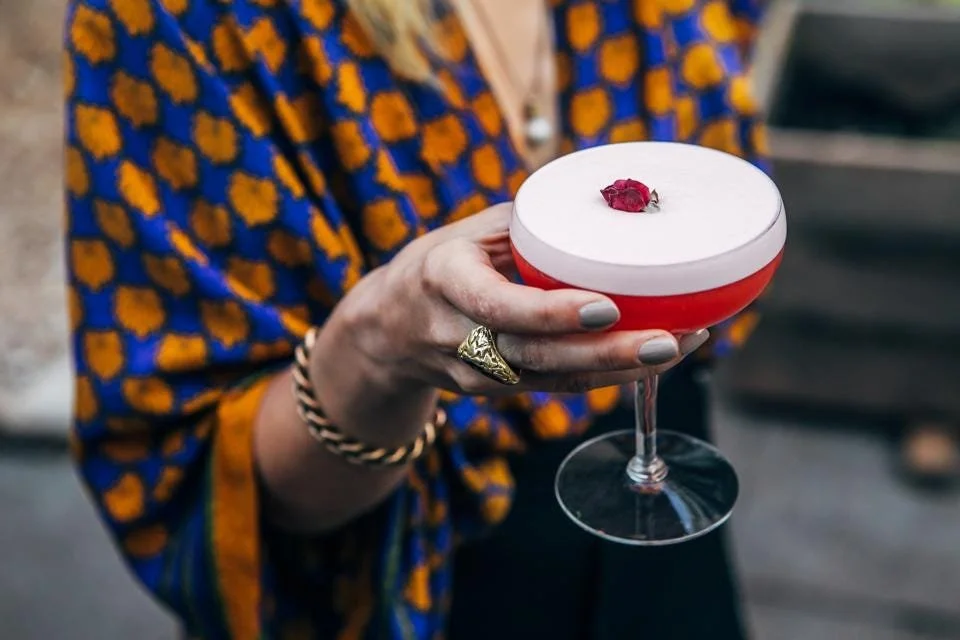
That a fully alcohol-free bar not only exists, but has seen enough demand from other cities to go on a multi-stop international tour, points to the growing popularity of the so-called sober curious movement.
“People are ready for a new kind of nightlife,” Bandrovschi says. “People are becoming more vocal about feeling like the odd one out [if they’re not drinking.] You’re seeing people raise their hands and say, Actually I’ve been thinking the same stuff.”
“All of a sudden, this quiet questioning is getting louder and it’s galvanizing people,” she adds. “Listen Bar is a space where all those people fill the room.”
From its launch, Listen Bar struck a nerve with people, many of whom were outside of New York, and who asked for the bar to visit, Bandrovschi says. Recently, Listen Bar asked their fans where they wanted to see the bar. A quarter of the survey respondents were based outside New York; those answers informed the stops along the world tour.
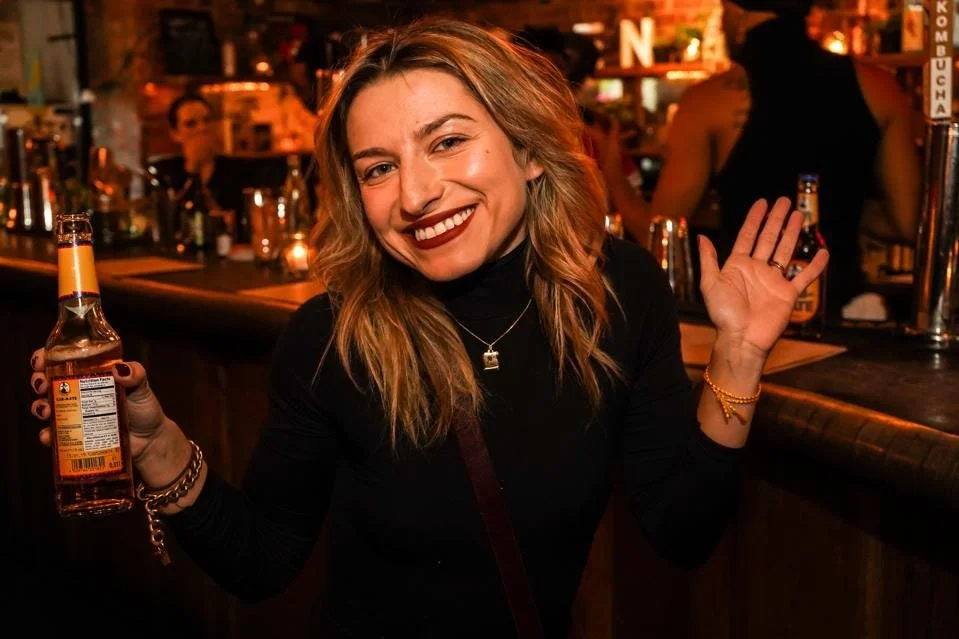
Listen Bar, one of New York’s first alcohol-free bars, came about after Bandrovschi tried to do Dry January some years ago. That first January, she accidentally sipped Champagne, and started noticing how hard it was to be social and not drink. A few years later, she opened one of the most talked about bars in New York. Now on her sixth Dry January and the second year of Listen Bar, Bandrovschi points to the perspective she’s gained as a result. “It’s not about taking away alcohol,” she says. “It’s about creating room in your social life to include not drinking. Once you create room for that, you start wanting to give that little corner more and more space.”
Listen Bar is part of the growing movement of mindful drinkers who may not necessarily call them sober, or reformed alcoholics, but who do take issue with prevalent pressures to drink all the time. “When you’re just going with the flow, you don’t realize how powerful the current is,” Bandrovschi says of society’s messages to drink. “It takes taking yourself out of it to notice all of the subtle nudges in your life that make alcohol a default choice.”
“It’s really exciting that conversations like these exist, to just perk up our antennae and say, Well, do we?,” she says of drinking pressures. “Do we need that everywhere all the time? Maybe not.”
2019’s Drink Trends: Tito’s Top Spirit In U.S.; No/Low Continues To Grow

Originally published in Forbes.
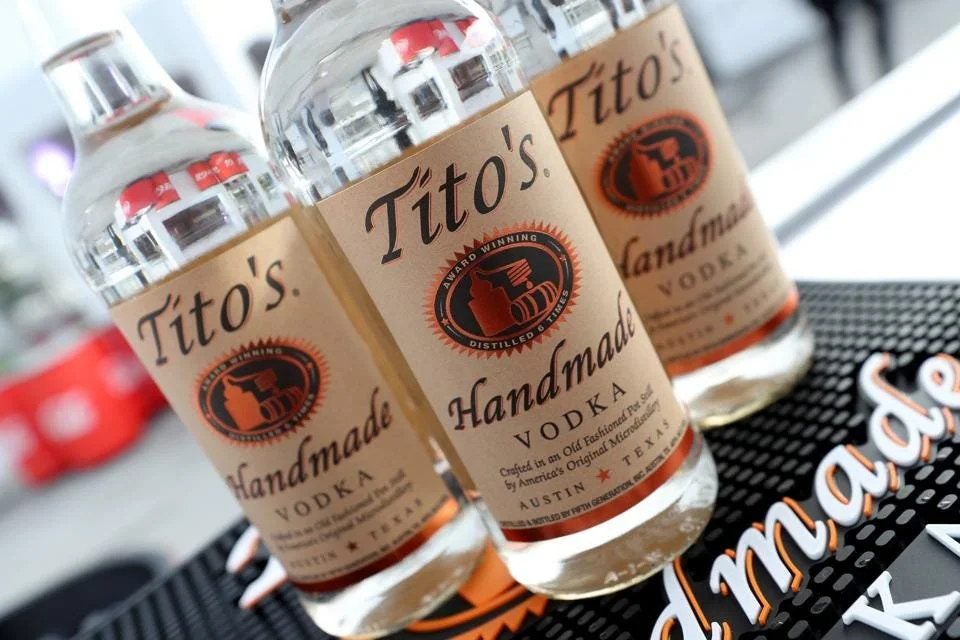
If you ordered a Tito’s cocktail last year, you have company. The vodka brand is now the top-selling distilled spirit in America, dethroning Smirnoff.

That’s according to a new report by IWSR, which collects data on the global beverage market. Vodka remains the top-selling spirit in America by volume; Tito’s Handmade Vodka, which jumped 20% in sales last year, can now claim top status.
Americans were also drinking mezcal and Japanese whisky last year. Those two categories grew by 40% and 23%, respectively.
If Americans were drinking spirits, then they weren’t drinking wine. According to the data, wine sales dropped in 2019. It’s the first time in 24 years that sales in this category have dropped, even as the sparkling wine category grew by 4%. According to IWSR, wine accounts for 11% of total beverage alcohol in the U.S.
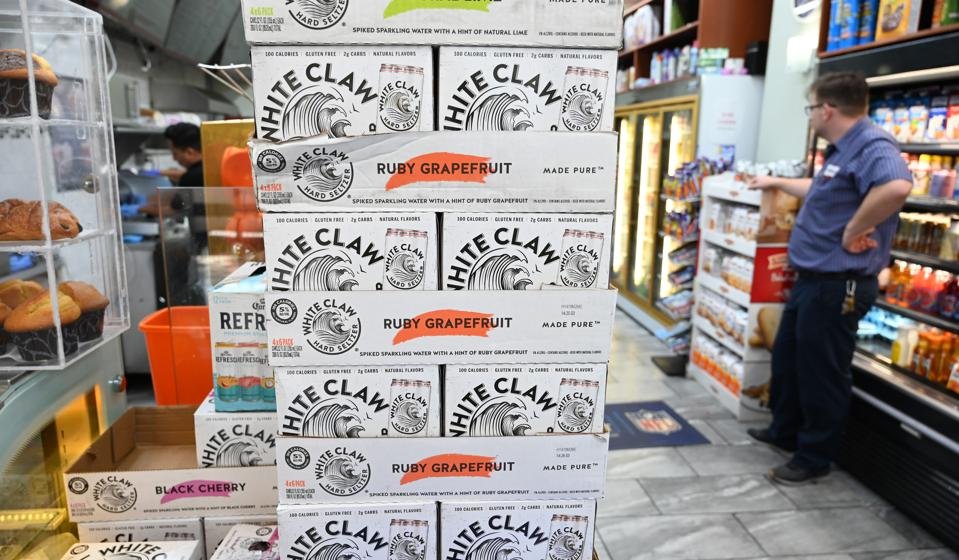
Other findings: the ready-to-drink category surged by almost 50% in 2019, pushed in part by the popularity of hard seltzers like White Claw. Canned cocktails also contributed to the surge in the RTD category. The ready-to-drink category may have cannibalized its next adjacent category: beer.
Beer sales, by category, dropped by 2.3%. Craft beer sales, however, were up (4.1%), and so were sales in the no- and low-alcohol category. The rise of low- and no-alcohol was predicted; IWSR’s previous report, published in Jan. 2019, which found the 52% of Americans said they were looking to reduce their alcohol intake. Last year’s report also noted that while Dry January continues to grow in popularity, data points to people extending their mindful drinking throughout the year. In 2019, low- and no-alcohol sales in the U.S. posted a gain of 6.6%, beating the industry forecast of 5.6%.
According to IWSR Drinks Market Analysis, the volume of low/no alcohol products in the U.S. was about 13 million nine-liter cases, up 8.3% from 2017. All told that’s still only about 0.5% of the total U.S. beverage alcohol market, which means there’s a lot of room to grow. IWSR forecasts that the category volume will grow by over 35% between 2018 and 2023. One important note: Because low- and no-alcohol spirits, such as Seedlip and Ritual are so new and still small in the U.S., there is no data yet. The data above reflects sales for low- and no-alcohol beer and wine.
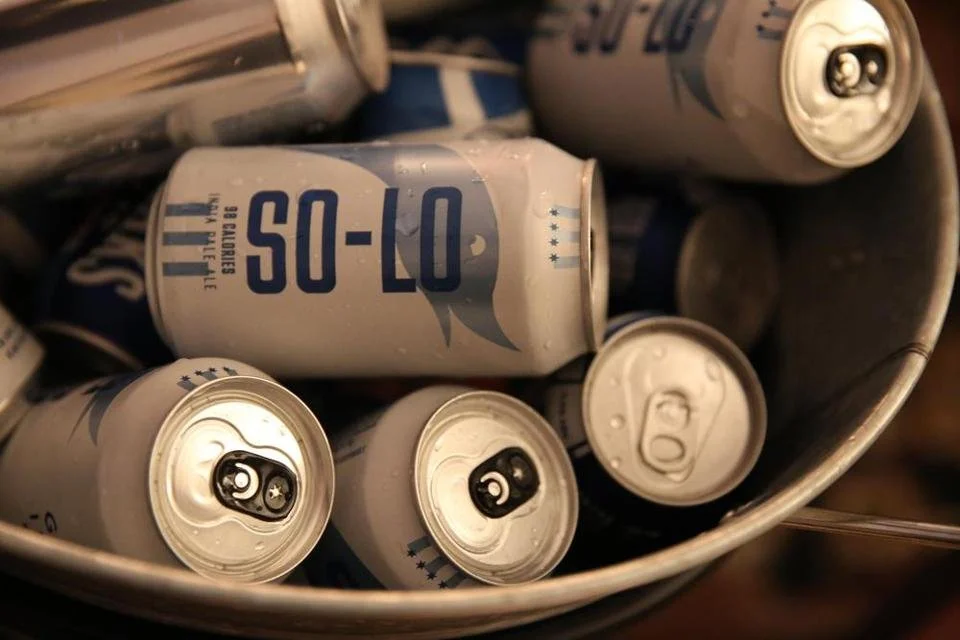
Brands, of course, are taking note. This month, Anheuser-Busch debuted several new low- and no-alcohol products, including Golden Road’s Mango Cart Wheat Ale, a non-alcoholic light beer inspired by Los Angeles’s fruit vendors, and Goose Island’s So-Lo, a low-calorie beer with IPA-worthy hoppy notes and 3% ABV.
Distill Ventures, a Diageo-backed drinks accelerator, has followed the non-alcoholic space for several years. "We do see the trend continuing to grow," Distill Ventures North American portfolio manager Heidi Otto says. "Going into 2020, I hear over and over that the consumer is all about choice. They want to be able to go out any time, any place and have an experience that allows them to have any type of drink that they want."
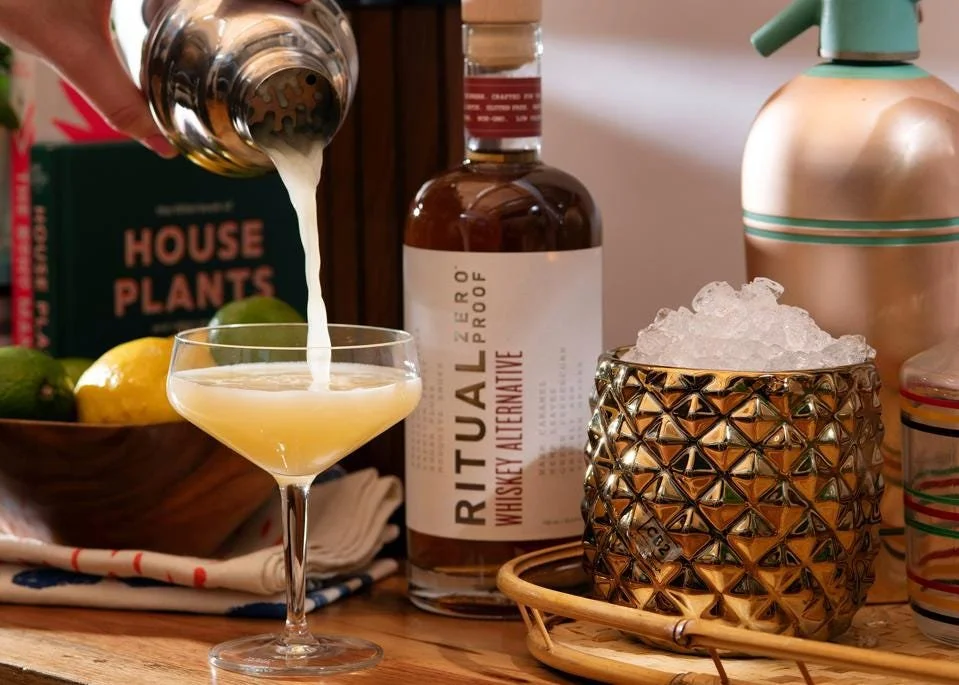
Chicago-Based Ritual Zero Proof Enters The Non-Alcoholic Space
Originally published in Forbes.
Following the success of non-alcoholic distillate Seedlip, there’s a new American-made non-alcoholic spirit entering the sober fray.
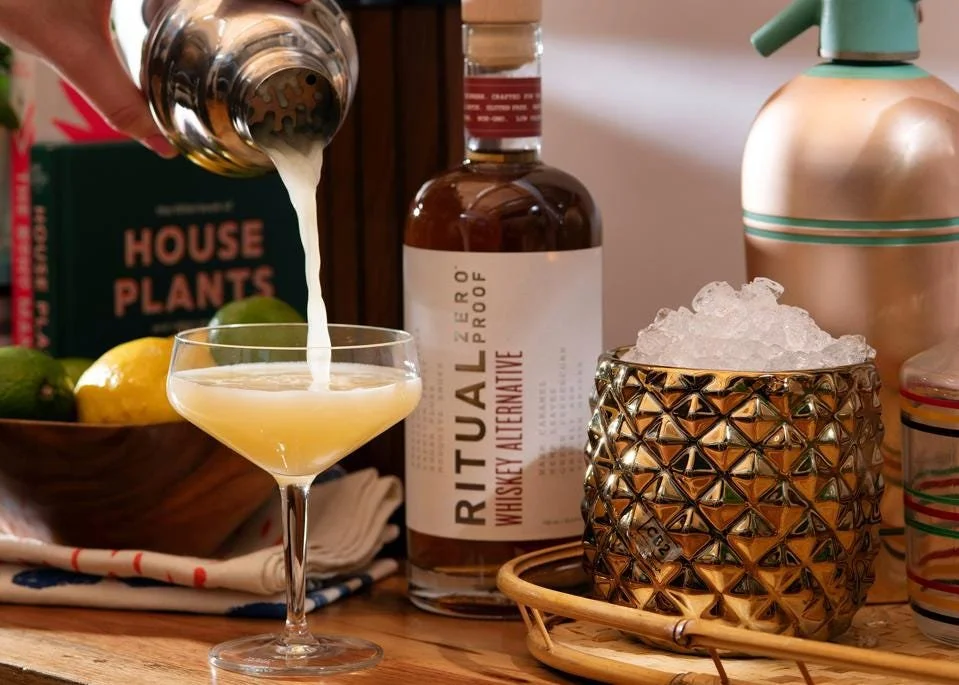
Meet Ritual Zero Proof, which debuted in Chicago last fall and sold out of a projected six-month run in just over a month. Created by Marcus Sakey , GG Sakey and David Crooch, Ritual aims to be a one-to-one substitute for liquor and was designed with cocktails in mind. It’s available for sale online, and it’s about to launch on the East Coast in the next months.
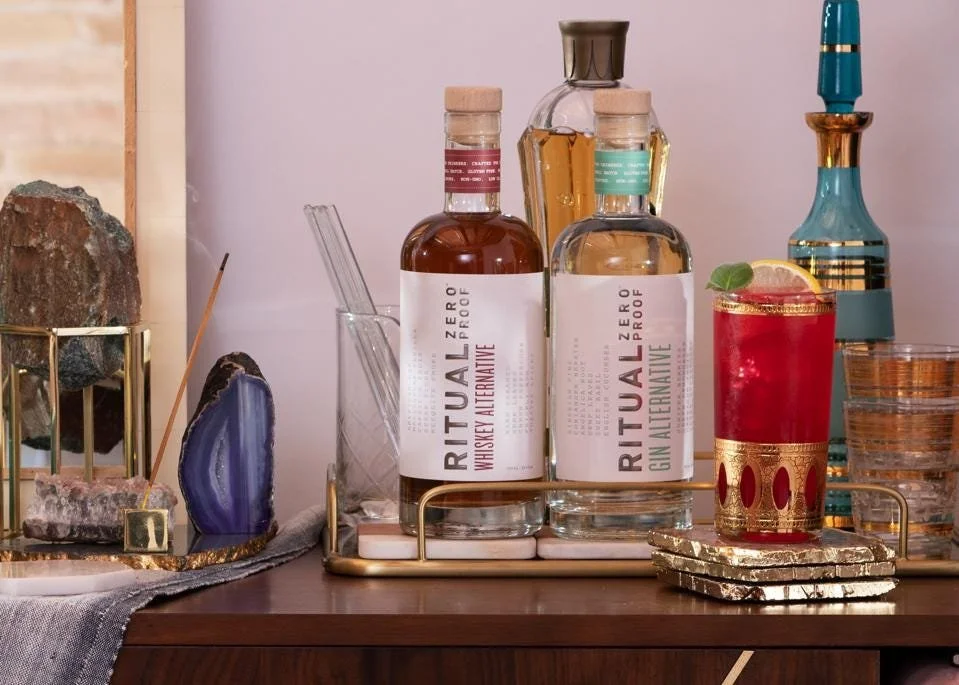
Ritual launches with two iterations, a whisky and a gin substitute crafted with the flavors, mouthfeel and burn of traditional spirits. (A zero-proof tequila alternative is set to arrive later this spring, in time for summer events.)
“Ritual zero proof is the first American spirit alternative that echoes the taste, the smell and the burn of liquor without the alcohol or calories,” co-founder Marcus Sakey says. “Our whisky alternative is rich with vanilla and caramel. Our gin is bright and herbaceous. They both have the heat and the bite that you expect of alcohol. You need that to make a proper cocktail.”
The nascent brand has already picked up investment from Distill Ventures, Diageo’s investment arm. Distill Ventures was an early investor in British brand Seedlip, the first non-alcoholic distillate; Diageo took a majority stake in the brand last August, just four years after its launch.
As Dry January grows in popularity each year, there are signs that more people not only are seeking out sober alternatives, they are doing so beyond just one month a year. According to a 2019 report from the University of Sussex, people who took part in Dry January sustained healthier drinking patterns throughout the rest of the year. Drinking days fell from 4.3 to 3.3 per week, while 82% of respondents felt more about their relationship to drinking and alcohol.
Yet even as people seek to lessen their alcohol intake, they may not necessarily seek to stop socializing or want to give up cocktails altogether. Ritual began, in part, when Marcus Sakey began tinkering with non-alcoholic options for himself and his then- pregnant wife. “In 2018, I took a conscious break from liquor and I realized I didn’t miss the alcohol, I missed the ritual of the alcohol,” he says. “Making a really nice drink and settling in with a book and a cocktail.”
“Ritual Zero Proof is not whisky with the whisky taken out,” he explains. “It’s not a subtractive process. It’s an additive one. It’s like cooking. You take the best ingredients that reflect the taste of what you’re trying to create and then you combine them with precision and art.”
Ritual Zero Proof aims to slot into the place where people might want to drink but they are more mindful about how they do it, Sakey says. “It’s not about getting rid of alcohol,” he says. “We’re not anti-alcohol at all. We’re just another tool in the cocktail kit.”
“To us, Ritual is about more,” the novelist turned spirits entrepreneur adds. “It’s the third drink that lets you stay out a little longer. It’s the low-ABV cocktail when you mix it with actual spirits. It means you can have two instead of one.”

Non-Alcoholic Mixer Seedlip Debuts Cocktail Book

Originally published in Forbes.

As Dry January gains in popularity each year, no-proof drinking is poised to move from a once-a-year ritual to a year-round balanced approach to alcohol. Around 10% of British drinkers planned to abstain this month, according to Alcohol Change UK, the non-profit behind Dry January.
At the head of the no-proof movement is Seedlip, the first and most well-known of the emerging non-alcoholic products. First launched in London in 2015, the brand was quickly embraced by the U.K. bar community. The brand arrived stateside in 2017, where it began appearing on cocktail menus across Manhattan and Brooklyn.
Seedlip has just debuted its first cocktail book, featuring 100 recipes from bartenders around the world, including PDT’s Jim Meehan and The Dead Rabbit’s Jack McGarry.
“There's not a lot of words in the book,” Seedlip founder Ben Branson said at the Manhattan book launch party, held last week at the Orchard Room. “This isn’t a coffee table, where you have a little flip and then never look at it.
“This is a rip pages out, put Post-Its in it, write on it,” he adds. “Bend pages. Get your hands dirty, make drinks and use it.”
Drinks you can make at home include the “Pais de Canela” from Blacktail’s Aidan Bowie. This cocktail features a mix of Seedlip Spice 94, a celery root and cinnamon cordial, cider spice noir tea, and apple cider vinegar, served with a grapefruit garnish.
The Walker Inn’s Devon Tarby’s “Souverain” is decadent swirl of Seedlip Spice 94, verjus, fresh lemon juice, spiced peach cordial and ginger syrup. There’s also the “Winter Shandy,” created by Trick Dog’s Josh Harris, made with Seedlip Spice 94, a spiced apricot ceylon shrub, lemon juice, sugar syrup and non-alcoholic beer.

Seedlip’s cocktail book launches during the time of the year that a lot of people try to drink less, or stop entirely. But as Seedlip’s Ben Branson notes, Dry January can be just the start of a new approach to balanced drinking and socializing. “I really hope Dry January doesn’t exist in the future,” he says. “We shouldn’t need Dry January in all fairness. All we’re looking to do is offer choice.”
“It’s a really important month at the moment,” Branson says of Dry January, and of launching the book this month. But as more people get tuned into a moderate approach to drinking, Branson hopes that no-proof drinking becomes a part of, not a just a novelty, of the drinking landscape.
“I don’t think we need it in the future,” he says. “I don’t care if you’re drinking or not. It should not even be in the conversation.”